

Tips for Small Business Owners for Filing their Form 941
reading time: 15 minute(s)

If you have employees, chances are you will need to file Form 941. Sometimes, 941 forms can be overwhelming for small businesses when it comes to figuring out the requirements, deadlines, and deposit schedules. But it doesn’t have to be this way! TaxBandits is here to make the 941 filing process less stressful.
To get started, check out the tips below to simplify the 941 filing process.
First, find out if your business is required to file Form 941
While most businesses are required to file 941 forms, there are some exceptions. In general, you must file Form 941 if your business pays wages to employees and withholds social security, Medicare, and income taxes from these wages. Even if your business didn’t pay any wages in one quarter, you are still likely required to file this form quarterly if your business was open for operations during the previous quarter.
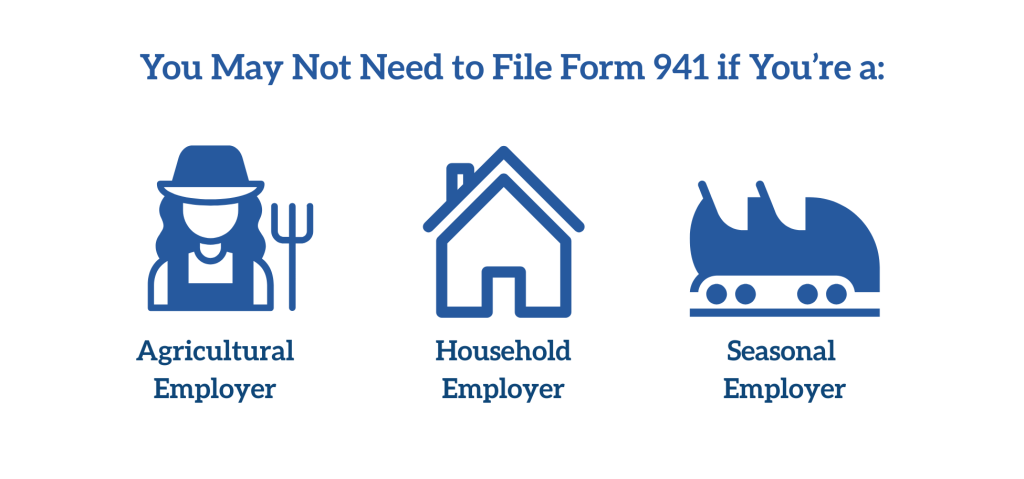
However, there are a few exceptions to this rule if you are in one of the employer types below:
- Agricultural employers: If you employ farm workers, you may be required to file Form 943 annually rather than Form 941 quarterly.
- Household employers: Unless you operate a home-based business, you are typically not required to file Form 941 for household workers. For example, if you hired a roofer to repair your roof, you would not need to file a 941 form. Instead, you may need to file a Schedule H (Form 1040) at the end of the year if you meet specific criteria. If you’re unsure where your business lands, check with the IRS for your filing requirements.
- Seasonal employers: If you only operate during certain months, you may not be required to file Form 941 for every quarter. In this instance, you only need to file for the quarters where you had tax liability. Just ensure you mark seasonal employer on your 941 forms to remain IRS compliant!
- Small employers: The IRS will notify the smallest employers that they can file Form 944 annually instead of Form 941 quarterly. The smallest employers are those whose annual liability for withheld federal income, social security, and Medicare taxes is $1,000 or less. Ensure you only use 944 forms if the IRS has notified you to do so to remain compliant.
Second, learn what kind of depositor you are
Businesses fall into two categories based on their employee tax deposit schedule: monthly or semiweekly. Take a look and see which category fits your business:
- Monthly Depositors
- You’re a monthly depositor if: your total tax liability is $50,0000 or less for the previous calendar year.
- Your required deposit schedule is: the 15th day of the following month for the previous month’s employee taxes.
- Semiweekly
- You’re a semiweekly depositor if: your total tax liability is more than $50,000 for the preceding calendar year.
- Your required deposit schedule is: the following Wednesday if your payday is Wednesday, Thursday, or Friday, or the following Friday if your payday is Saturday, Sunday, Monday, or Tuesday.
- Next-Day Deposit Rule: Regardless of whether you are a semiweekly or monthly depositor, if you accumulate $100,000 or more of tax liability on any deposit period day, you must deposit it the next business day. You will then be considered a semiweekly depositor for the remainder of the current calendar year and the following year.
Note: Semiweekly depositors must complete and attach 941 Schedule B to their Form 941. Not sure what Schedule B does? It provides the IRS with a breakdown of your business’s tax liability (not the IRS deposit) for each day of the quarter.
Third, know when to file:
Nobody wants the stress of penalties from late filing, so protect your business by filing on time. Mark the dates below on your calendar to ensure you’re hitting your 941 deadlines:
- First quarter: April 30
- Second quarter: July 31
- Third quarter: October 31
- Fourth quarter: January 31
Fourth, don’t file alone
Filing can be a stressful process, but it’s easier when you have support. That’s what we’re here for: to simplify the 941 filing process so that you can focus on what matters most. See how our features become your solutions:
- Upload All in One Go
- Whether you have 1 or 100 941s to file, we have you covered. Use our Excel template to upload your filing data once, rather than individually for each form.
- Nothing to Report, No Problem
- Filing 941 forms can be a hassle when you have no taxes to report. We’ll save you time in your zero reporting with our option to auto-generate your zero return.
- E-Sign Your Way
- Sign your forms the way you prefer. You can use 8453-EMP or your Online Signature PIN. If you don’t have a PIN, no worries, request it for free.
- Same Data, New Form
- It’s frustrating to have to re-enter the same data every quarter, and it can feel like a waste of time. But if you’ve filed with us before, we will prefill your form with data from the previous quarter, saving you time and stress.
- Prevent Problems Before They Start
- Form 941 filing requires a lot of information, and it’s easy to make an error that can lead to a penalty. Prevent penalties with our error checker, which notifies you of errors before you file, giving you time to correct them without a penalty.
- Pay for What You Need
- Our volume-based pricing saves you the frustration of overpaying for your filing. Select how many forms you need, pay, and start filing away.
Fifth, start filing your 941s
Now that you have these tips in mind, the final tip is to just start filing Form 941! But, again, you don’t have to go in alone. If you have any questions, reach out to TaxBandits’ U.S.-based support team through phone, email, or live chat. We are always here to help.
So what are you waiting for? Don’t wait until the last minute, start e-filing your Form 941 with TaxBandits today!

Leave a Comment