

reading time: 12 minute(s)
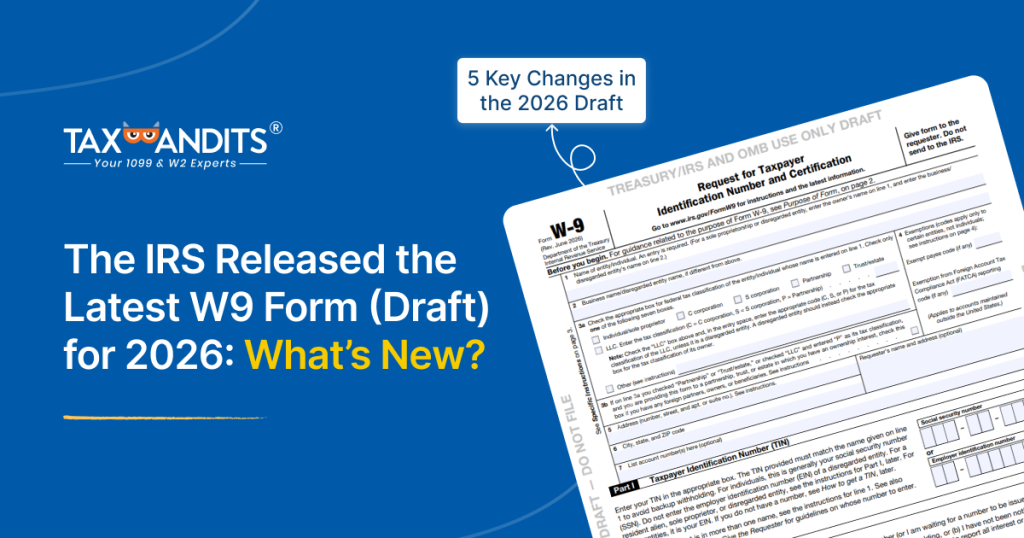
Tax compliance is constantly evolving, and staying informed about IRS updates can help businesses avoid reporting issues and maintain compliance.
The IRS just released an updated draft of Form W-9 (Rev. June 2026), along with revised draft instructions that introduce important changes related to digital asset reporting, backup withholding, reporting thresholds, and new compliance requirements tied to recent tax legislation.
Let’s break down these changes and explain how they might impact your filing process, so you’re prepared well in advance.
1. New Checkbox for Exempt Digital Asset Brokers
Part II (Certification) of Form W-9 now includes a dedicated checkbox that allows certain U.S. digital asset brokers to certify that another broker involved in the transaction also qualifies as a U.S. digital asset broker under IRS regulations.
Requirements for the other broker:
- The broker must meet the IRS definition of a digital asset broker under Regulations section 1.6045-1(g)(4)(i)(A)(1)
- The broker must qualify as an exempt recipient under Regulations section 1.6045-1(c)(3)(i)(B)(12)
- Certain registered investment advisers that are not otherwise exempt recipients are excluded
Here’s what it means practically: when more than one broker is involved in a digital asset sale, only one of them needs to report it to the IRS. The second broker can skip reporting — but only if the first broker certifies their status using this new checkbox on the W-9.
2. Transitional Relief for Digital Asset Brokers Extended
The IRS also announced extended transitional relief for digital asset brokers under Notice 2025-33.
Under this relief:
- Brokers that facilitate digital asset sales during 2025 may receive penalty relief if they make a good-faith effort to file accurate and timely Forms 1099-DA
- Backup withholding generally will not apply to certain digital asset sales through calendar year 2026
3. Backup Withholding Threshold Increased to $2,000
The draft instructions also reflect changes introduced under the One Big Beautiful Bill Act (OBBBA).
Beginning with payments made after 2025:
- The reporting threshold under Sections 6041 and 6041A increases from $600 to $2,000 for many reportable payments
- The backup withholding threshold is also increased
- The threshold will be indexed for inflation after 2026
4. Updated Rules for Third-Party Network Transactions
The draft instructions also include updates for third-party settlement organizations (TPSOs), such as payment platforms and online marketplaces.
Under the revised rules:
- Reporting generally applies when payments exceed $20,000, and transactions exceed 200
- Backup withholding rules are updated to reflect the revised de minimis exception for third-party network transactions
Businesses that receive payments through third-party payment platforms should monitor how these changes may affect Form 1099-K reporting requirements.
5. New Reporting Requirements Tied to Certain Deductions
The draft instructions also mention additional reporting requirements tied to new deductions introduced under the OBBBA.
Beginning in 2025, additional reporting may apply for:
- Qualified car loan interest
- Cash tips
- Overtime compensation
The IRS states that additional guidance will be included in Schedule 1-A (Form 1040) instructions and related reporting forms.
How to prepare for the latest version of Form W-9
The 2026 Form W-9 is still in draft status, meaning the IRS could make additional changes before the final version is officially released.
Here’s how businesses and recipients can prepare now:
If you’re a payer:
- Review your W-9 collection procedures
- Educate recipients about updated reporting requirements
- Monitor digital asset reporting obligations
- Evaluate how the new reporting thresholds may affect your filing process
If you’re a recipient:
- Review whether the digital asset broker certification applies to you
- Stay updated on future IRS guidance and final form changes
Explore our comprehensive W-9 Manager!
Whether you’re a payer or recipient, TaxBandits W-9 Manager provides the tools you need to simplify W-9 compliance.
Payers can securely request, collect, validate, and manage W-9 forms online, while recipients can easily complete and share their forms electronically.
From W-9 collection to TIN matching and 1099 reporting, TaxBandits helps streamline your entire compliance workflow.
Leave a Comment