

reading time: 14 minute(s)
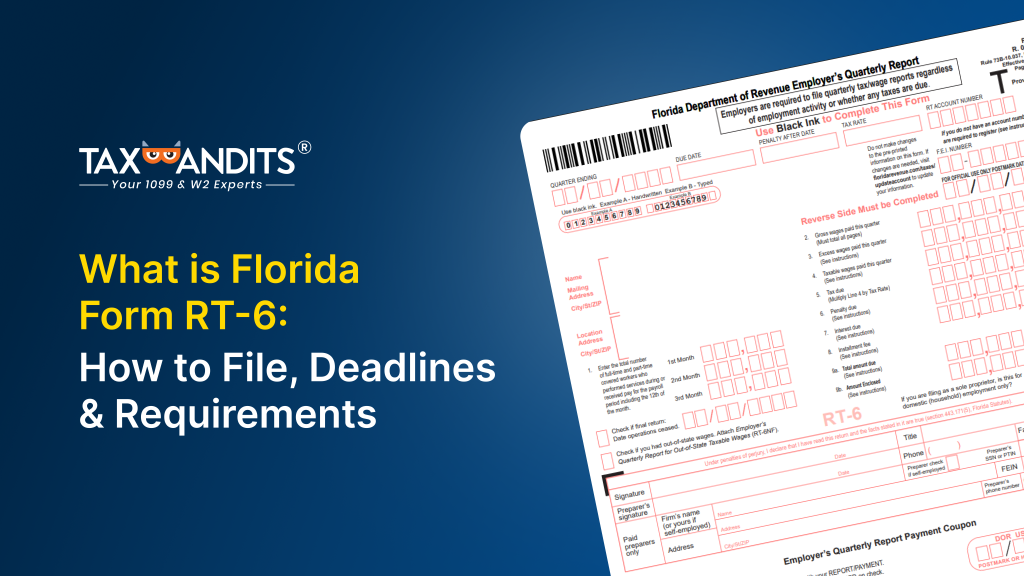
Payroll doesn’t stop at your employee’s paycheck. As an employer, you’re also responsible for meeting state payroll tax reporting requirements. Missing a filing deadline or submitting incomplete information can lead to unnecessary penalties and additional work later.
If your business has employees in Florida, you need to be familiar with Florida’s Form RT-6. Whether you’re filing for the first time or simply looking to better understand your reporting responsibilities, knowing when to file, what information to report, and important deadlines can keep you compliant.
Here’s everything you need to know about Florida Form RT-6.
What is the Florida Form RT-6?
Florida Form RT-6, also known as the Employer’s Quarterly Report, is used to report employee wages and calculate reemployment tax due for a calendar quarter. Employers registered under Florida’s Reemployment Tax Program are required to file this form every quarter with the Florida Department of Revenue.
The report summarizes your quarterly payroll information, including employee wages, taxable wages, and any reemployment tax due.
Who needs to file Florida Form RT-6?
If you’re registered for Florida reemployment tax, you generally need to file Florida Form RT-6.
Many employers assume they only need to file when tax is due, but that’s not always the case. You may still be required to file if:
- You paid wages during the quarter, even if no reemployment tax is due.
- You had no employees during the reporting period.
- You didn’t pay any wages during the quarter.
If you’re a new employer and don’t have a Florida reemployment tax account number yet, you need to register before filing your first quarterly report.

What information do you need before filing?
Preparing your payroll information in advance can make filing much easier. Before completing Florida Form RT-6, it’s helpful to have:
- Florida reemployment tax account number
- The number of employees for the required payroll period
- Total gross wages paid during the quarter
- Excess wages that exceed the taxable wage base
- Taxable wages for the quarter
- Your assigned reemployment tax rate
- Any tax due for the reporting period
Accurate payroll records help ensure your report is complete and reduce the chance of filing errors.
How to complete Florida Form RT-6?
Form RT-6 filing process is more straightforward than many employers expect.
Step 1: Gather Your Information
Keep your payroll records, employee wage details, and Florida reemployment tax account information ready.
Step 2: Complete the Form
Enter the required payroll information, including your employee count, wages, and any reemployment tax due.
Step 3: Review and Submit
Review the form for accuracy, submit it to the Florida Department of Revenue, and pay any tax due by the applicable deadline.
Note: If you have a tax balance due, make the required payment and submit your report by the applicable deadline.
When is Form RT-6 due?
Form RT-6 is filed quarterly, and the report is due by the last day of the month following the end of each calendar quarter.
| Quarter | Due Date |
| Q1 (January – March) | April 30 |
| Q2 (April – June) | July 31 |
| Q3 (July – September) | October 31 |
| Q4 (October – December) | January 31 |
If a due date falls on a weekend or federal holiday, the deadline moves to the next business day. Employers making electronic payments should also initiate their payment before the state’s required cutoff time to ensure it’s considered timely.
What happens if you file Florida Form RT-6 after the deadline?
Filing after the due date may result in penalties. To avoid additional charges, be sure to file your return and make any required payment by the applicable deadline.
Late Filing Penalty
If you file your return after the deadline:
- A $25 penalty is charged for every 30 days (or part of 30 days) that the return remains late.
- The penalty begins accruing the day after the filing due date.
Electronic Filing Penalty
If you’re required to file electronically but submit a paper return instead:
- A $25 penalty may apply.
- An additional $1 per employee may be charged, up to a maximum of $300.
- Additional penalties may also apply if you’re required to make your payment electronically but fail to do so.
Important things to remember
- File on time – Submit Florida Form RT-6 by the quarterly deadline to avoid penalties and interest.
- Review your information – Verify employee details, wage amounts, and tax calculations before submitting your return.
- Correct errors properly – If you need to update a previously filed return, use the appropriate correction process instead of modifying your current RT-6.
- Keep your records – Save a copy of your filed return, payment confirmation, and supporting payroll records for future reference.
Final thoughts
Whether you’re filing your quarterly payroll tax return for the first time or managing ongoing payroll reporting, having the right filing solution can help make the process simpler and more efficient.
With TaxBandits, you can prepare and e-file Florida Form RT-6 online with confidence using a streamlined filing workflow, built-in validations, secure submission, and filing status tracking—all from one convenient platform.
Leave a Comment