

How to Stay Form 941 Compliant as an LLC
reading time: 14 minute(s)
As an employer, you typically need to file a 941 form, but what if you are a Limited Liability Company (LLC)?
LLCs are a popular choice for small business owners because they offer personal asset protection from business lawsuits or debts. However, with that protection, questions arise about how or whether to file employment taxes. We’ll help answer these questions with our helpful tips.
Let’s get started with the basics.
Limited Liability Company (LLC) – An Overview
First, let’s make sure we understand what an LLC is. An LLC is a business structure you can set up in the United States according to state law that allows individuals to start a business that keeps their assets safe from business debts and liabilities.
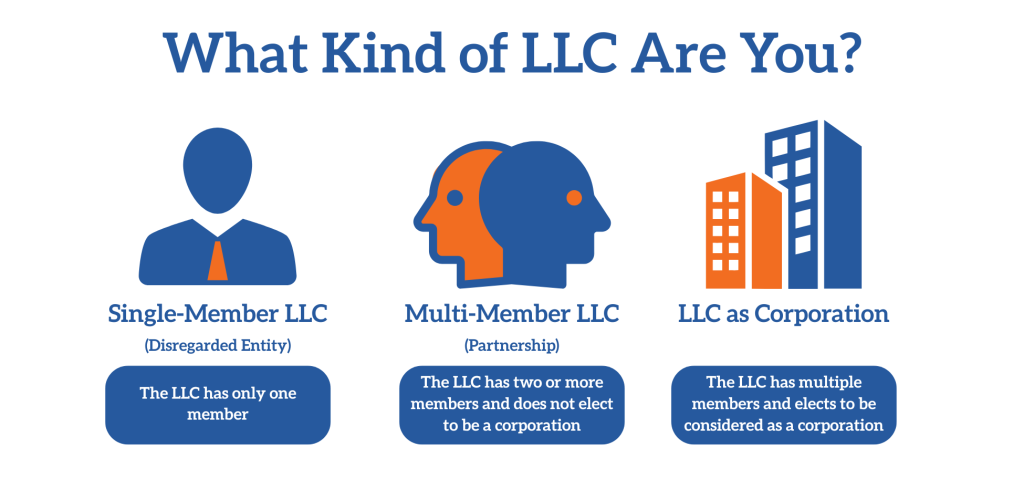
For federal income tax purposes, your LLC can be classified in one of three ways:
- Single-Member LLC (Disregarded Entity): If your LLC is a single-member entity and has employees, it is treated as a sole proprietorship for tax purposes and must file Form 941 only if there are employees and wages paid.
- Multi-Member LLC (Partnership): If your LLC has two or more members, it will be treated as a partnership, and you must file Form 941.
- LLC as Corporation: If your LLC is registered as either S-Corp or C-Corp, you must file a 941 to report the taxes withheld from your employee paychecks.
Now that we know what an LLC is, it’s time to learn some tips to help you file your payroll form.
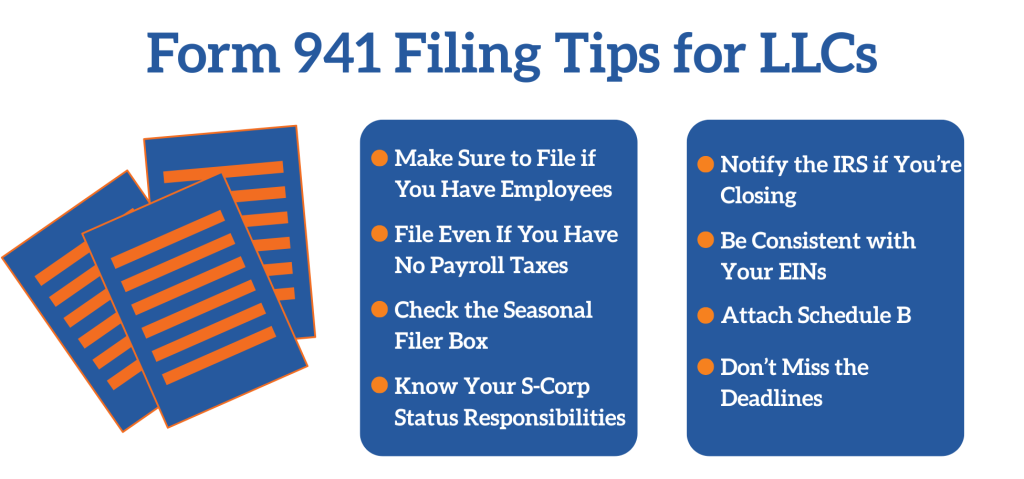
Make Sure to File if You Have Employees
If your LLC has employees and pays wages subject to federal income tax withholding, Social Security, or Medicare taxes, then you are typically required to file a 941. Failing to file when you have employees and pay wages can result in penalties and compliance issues, so ensure you file!
File Even If You Have No Payroll Taxes
When you haven’t paid any wages to your employees for a quarter, your tax amount will automatically be zero. While it may seem confusing, the IRS still requires you to file Form 941 even if your tax amount is zero unless you are a single-member LLC. This is called zero reporting, and you will need to enter zeros in all wage and tax fields.
Check the Seasonal Filer Box
Some LLCs operate seasonally, so they may not have taxes to report every quarter. If you fall into this category, make sure you are still filing 941 forms for each quarter you are operating and notify the IRS that you are a seasonal employer by checking the ‘Seasonal Employer’ box. Keep in mind, you must file at least one 941 a year, even if you’re a seasonal employer!
Know Your S-Corp Status Responsibilities
Electing your LLC to be treated as an S-Corp comes with an extra responsibility. The IRS expects owners who perform services to be paid a reasonable compensation that is subject to withholding and reported on Form 941. In other words, shareholders should be paid compensation that is comparable to what a similar business would pay someone for the same services.
Notify the IRS You’re Closing
Is your LLC going out of business? If so, ensure that you still file your final Form 941 return and notify the IRS by checking the box on line 17 and attaching a statement that includes the address where the payroll records are kept and the name of the person responsible for maintaining them.
Be Consistent with Your EINs
A key part of remaining compliant is ensuring you use your Employer Identification Number (EIN) properly. Ensure you always use the same EIN for payroll tax filing that was used during IRS business registration.
Have different EINs for divisions or multiple doing business as (DBA) names? Make sure you file a separate 941 for each EIN because the IRS treats each EIN as a separate filer, regardless of whether or not they are under the same LLC.
Attach Schedule B
The IRS recognizes two types of tax deposit schedules, semi-weekly and monthly. If you are a semiweekly depositor, you are required to complete and attach Schedule B to your Form 941 to remain compliant.
Make sure you know which depositor your LLC is:
- Monthly: You reported $50,000 or less during the 941 lookback period (the prior 12-month reporting period starting on July 1st of the second preceding year and ending on June 30th of the first preceding year)
- Semiweekly: You reported $50,000 or more during the lookback period
Don’t Miss the Deadlines
Avoid penalties or compliance issues by knowing when to file your forms. The 941 Form must be filed quarterly, with deadlines at the end of each quarter. Mark the deadlines below on your calendar to never file late:
- First Quarter (January – March): April 30
- Second Quarter (April – June): July 31
- Third Quarter (July – September): October 31
- Fourth Quarter (October – December): January 31
Disclose Updated Tax Classifications
When changes occur, the IRS wants to be in the loop. If your LLC recently changed its tax classification (e.g., from sole proprietorship to S-Corp), make sure the IRS is notified through Form 8832 or Form 2553, and use the correct classification when filing Form 941.
Let’s Start Filing
Now that you have prepared for reporting with a 941 form, it’s time to start filing!
With TaxBandits, we make it easy to use these tips. From efficient zero-reporting to ensuring all information is accurate, we are here to save you time and energy with every file.
Start filing your LLC’s 941 forms today!
Leave a Comment