

reading time: 12 minute(s)
Preparing a partnership tax return isn’t just about plugging numbers into a form. It involves reviewing income streams, confirming expense categories, updating partner capital accounts, and ensuring each Schedule K-1 reflects the correct allocation.
When multiple partners are involved, even a small oversight can multiply into bigger issues. If your records need more time to be finalized, requesting an extension can help you stay organized without risking penalties.
Let’s walk through what a Partnership Tax Extension is, how it works, and when it makes sense to file one.
What Does Form 1065 Actually Do?
Partnerships report their annual financial activity using Form 1065. Unlike corporations, partnerships generally do not pay federal income tax at the entity level. Instead, they operate as pass-through entities. This means:
- The partnership reports total income and deductions.
- Each partner receives a Schedule K-1.
- Partners include their share of income or loss on their individual tax returns.
Even if the partnership did not generate profit — or had very little activity — filing Form 1065 is still required.
Accurate reporting is especially important because each partner’s personal return depends directly on the information reported by the partnership. Errors in allocations, ownership percentages, or capital accounts can lead to amended returns and IRS correspondence.
What is a Partnership Tax Extension?
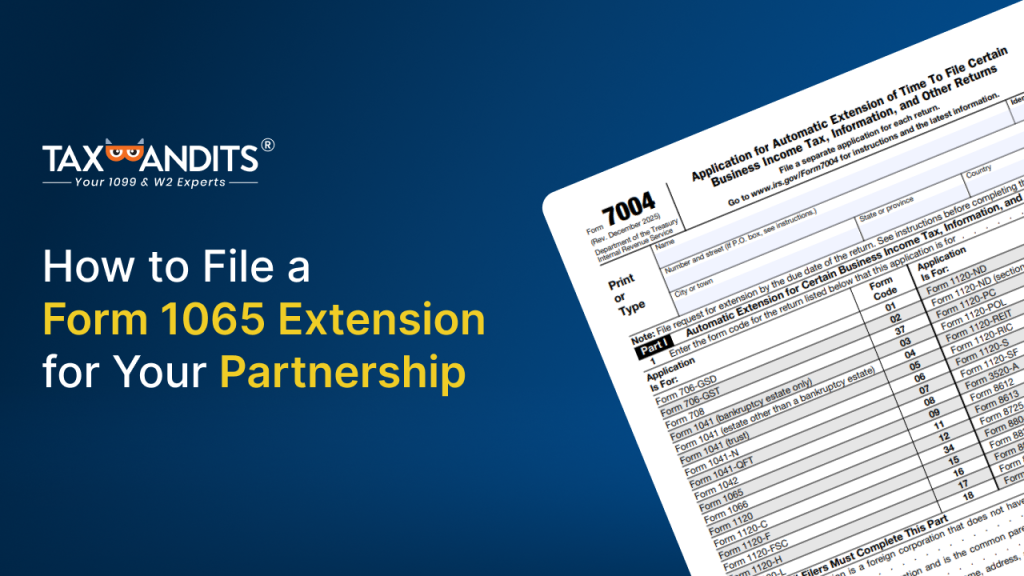
A Partnership Tax Extension gives your business additional time to file its Form 1065 return. To request this extension, partnerships must submit Form 7004 to the IRS. When filed by the original deadline, approval is automatic.
For calendar-year partnerships:
- Original filing deadline: March 15
- Extended filing deadline: September 15
This six-month extension provides valuable time to reconcile books, confirm allocations, and finalize partner details properly.
However, remember: this extension applies to filing the return — not to making payments. If any taxes or penalties apply at the entity level, they must still be addressed by the original due date.
Why Partnerships Often Choose to Extend
Filing an extension is not a sign of disorganization. In many cases, it’s a strategic move.
Here are common situations where an extension makes sense:
- Final financial statements are still being reviewed
- Partner ownership changed during the year
- Capital account reporting requires adjustments
- Additional documentation is pending
- Complex allocations need extra verification
Because late-filing penalties for partnerships are assessed per partner, per month, missing the deadline can become expensive quickly. Filing an extension on time protects your partnership from those penalties while giving you the flexibility to file accurately.
How to File 1065 Extension
Requesting a Form 1065 extension is relatively simple, but the details must be correct.
You’ll need:
- Legal name of the partnership
- Employer Identification Number (EIN)
- Business address
- Tax year information
- Estimated tax details, if applicable
Many businesses prefer electronic filing because it provides immediate confirmation from the IRS. Mailing a paper form is still an option, but processing times and delivery delays can create unnecessary stress close to the deadline.
E-filing reduces uncertainty and ensures your request is recorded on time.
What Happens After You File 1065 Extension?
Once your extension is accepted:
- Your new Form 1065 deadline becomes September 15 (for calendar-year filers).
- You can take the necessary time to verify allocations and financial data.
- Partners receive accurate Schedule K-1 forms for their personal filings.
This extra time can prevent amended returns, partner confusion, and compliance issues later in the year.
Final Thoughts
Partnership returns involve coordination, accuracy, and careful review. When multiple partners depend on one filing, precision matters.
A Partnership Tax Extension provides the flexibility to complete your return properly — without rushing and without incurring late-filing penalties. The most important step is filing before the March 15 deadline. Once that’s done, you gain valuable time to finalize your Form 1065 with confidence.
If you need to request an extension, TaxBandits makes Form 7004 e-filing simple and secure. You can submit your extension online in minutes and receive an IRS acknowledgment once accepted. With built-in validations and instant confirmation, you reduce errors and eliminate mailing delays.
When timing matters, file your Partnership Extension with TaxBandits and stay compliant with confidence.
Leave a Comment