

1099-DA vs. 1099-B: How Crypto Tax Reporting Differs from Stock Reporting
reading time: 13 minute(s)
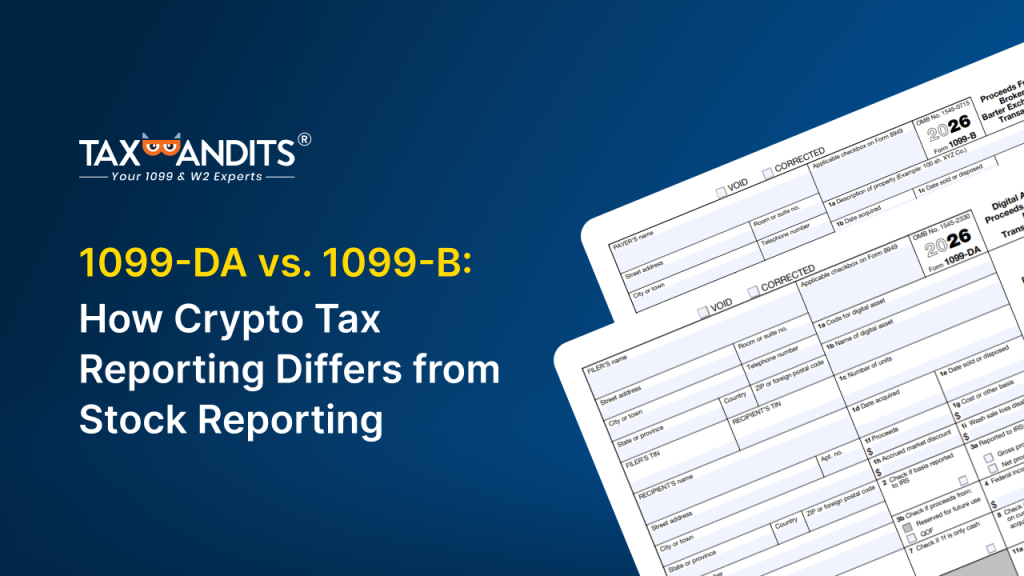
If you sell stocks, your broker sends you a Form 1099-B—simple and automated. Crypto has never worked that way. For years, investors track and report their own digital asset transactions with little broker oversight.
That’s now changing. Starting with the 2025 tax year, a new Form 1099-DA requires digital asset brokers to report crypto sales to the IRS. It serves the same broad purpose as 1099-B, but the rules differ in important ways.
Why two different forms?
Stock reporting has been standardized for decades. Brokers have long been required to report securities sales to the IRS, with clear rules around cost basis, holding periods, and wash sales already in place.
Digital assets are a different story. The IRS defines a digital asset as any digital representation of value recorded on a cryptographically secured distributed ledger—such as a blockchain—that is not cash. Because this asset class is relatively new, a separate form is needed to address its unique characteristics. That’s where Form 1099-DA comes in, built specifically for:
- Cryptocurrencies (Bitcoin, Ethereum, etc.)
- Stablecoins
- NFTs (Non-Fungible Tokens)
Two asset classes, two different reporting frameworks. The sections below break down each form and where they diverge.
What is Form 1099-B?
Form 1099-B is filed by a broker for each person on whose behalf they sold stocks, commodities, regulated futures contracts, debt instruments, options, or securities futures contracts for cash.
For covered securities, brokers are required to report:
- Proceeds — The gross amount received from the sale
- Cost basis — What you originally paid for the security
- Date acquired and date sold — To determine short-term vs. long-term gains
- Wash sale loss disallowed — If both the sale and repurchase of the same security occur within the same account within 30 days, the loss disallowed must be reported
What is Form 1099-DA?
Form 1099-DA is the IRS’s new reporting form built exclusively for digital asset transactions. A broker—defined as any person who, in the ordinary course of trade or business, stands ready to effect sales of digital assets on behalf of others—is required to file this form.
For each sale, brokers are required to report:
- Name and code of the digital asset sold
- Number of units sold
- Date sold and proceeds received
- Cost basis and date acquired—though this is being phased in
On the phase-in, it’s worth noting:
- 2025 transactions — Brokers must report gross proceeds but are not required to report basis information.
- 2026 onwards — For covered securities, brokers must also report the cost basis, the date acquired, and the gain or loss.
1099-DA vs. 1099-B: How the two forms actually differ
| Category | Form 1099-B | Form 1099-DA |
| Asset Type | Covers stocks, bonds, commodities, and securities. | Built for digital assets such as cryptocurrencies, NFTs, and stablecoins. |
| Issued By | Issued by traditional brokers. | Issued by digital asset brokers. |
| Cost Basis Reporting | Has established mandatory cost basis reporting for covered securities. | Cost basis reporting is being phased in. Brokers are required to report basis information beginning in 2026. |
| Wash Sale Rules | Losses disallowed under the wash sale rule must be reported for covered securities. | Wash sale reporting applies only to tokenized securities, not regular crypto. |
| Self-Custody & Staking | Does not have an equivalent concept. | Rewards and staking payments are not reported on Form 1099-DA, and self-custody wallet transactions are not covered. |
What this means for you as a taxpayer
How 1099-DA affects you depends on how you hold and trade crypto:
If you only use centralized exchanges
- Expect to receive Form 1099-DA starting in 2026 for your 2025 transactions
- Basis reporting may not be complete until 2026, so don’t rely solely on the form this year
If you use self-custody wallets or DeFi platforms
- 1099-DA does not capture these transactions
- You are still fully responsible for tracking and reporting them yourself
If you earn staking rewards
- These rewards do not appear on 1099-DA at all
- You must track and report separately
If you hold both stocks and crypto
- You may receive both 1099-B and 1099-DA
- Make sure you’re not double-counting transactions that may appear on both forms
Final thoughts
Form 1099-DA is a major step toward bringing crypto tax reporting closer to traditional stock reporting, but taxpayers still need to maintain accurate records and carefully track transactions.
As digital asset reporting rules continue to evolve, solutions like TaxBandits help businesses and tax professionals simplify IRS reporting through secure, streamlined e-filing.
Staying informed now can help reduce surprises during tax season.
Leave a Comment