

New Jersey NJ-927: How to File, Deadlines & Requirements
reading time: 13 minute(s)
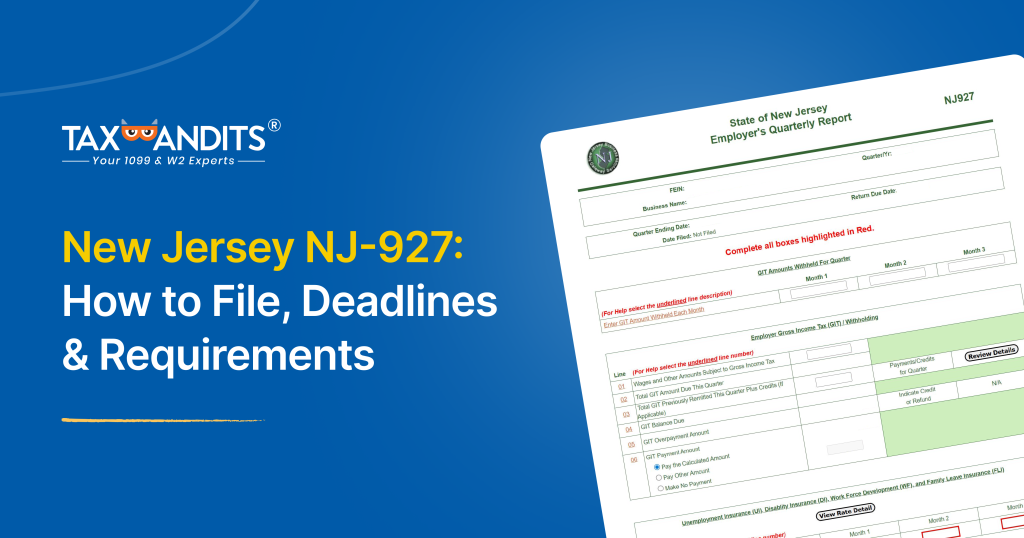
Quarter-end payroll is more than closing out books. For New Jersey employers, it means making sure the required quarterly payroll report is completed and filed on time.
Form NJ-927 is part of that quarterly reporting process. While the filing follows a regular schedule, knowing what information to report and having the right records ready can make the process much easier. If you are preparing your next New Jersey payroll filing, understanding the NJ-927 requirements can help you avoid missed deadlines and unnecessary filing issues.
What is Form NJ-927?
Form NJ-927 is New Jersey’s Employer’s Quarterly Report. Employers subject to New Jersey’s Unemployment Compensation Law generally use it to report payroll information and applicable contributions each quarter. The return includes Gross Income Tax withholding and information related to Unemployment Insurance (UI), Workforce Development (WF), Disability Insurance (DI), and Family Leave Insurance (FLI).
The form also calculates the balance due after accounting for payments or credits already made. This means your payroll records and previous payments both matter when completing the return.
Who files Form NJ-927?
New Jersey requires employers, other than domestic employers, that are subject to the state’s Unemployment Compensation Law to file an Employer’s Quarterly Report. The state also requires a report even when there is no payroll during the quarter. Domestic employers who employ only household workers follow a separate annual filing process using Form NJ-927H.
If Form NJ-927 applies to your business, the most important step is keeping track of the quarterly due dates.
When is Form NJ-927 due?
The deadline to file Form NJ-927 is the 30th day of the month following the end of each quarter. New Jersey states that the report and any required remittance must be received by the deadline, even when the due date falls on a weekend or holiday.
For 2026, the quarterly schedule is:
| Quarter | Due Date |
| Q1 (January – March) | April 30 |
| Q2 (April – June) | July 30 |
| Q3 (July – September) | October 30 |
| Q4 (October – December) | January 30 |
Because the filing deadline comes shortly after the quarter closes, it helps to have the required payroll information organized before you begin the return.
What information is needed to file Form NJ-927?
The NJ-927 combines Gross Income Tax reporting with labor-related wage and contribution information. Before filing Form NJ-927, gather:
- Gross wages and other amounts subject to New Jersey Gross Income Tax
- GIT withheld for each month or applicable reporting period
- Payments and credits already made during the quarter
- Number of covered workers for each month
- Wages subject to UI, DI, WF, and FLI
- Wages above the annual taxable wage base
- Applicable UI, WF, DI, and FLI contribution information
- Covered workers under approved private plans, when applicable
Note: Wages subject to labor contributions may not always match the wages reported for Gross Income Tax purposes.
Once these figures are ready, you can move through the return without stopping to track down missing payroll information.
How to file Form NJ-927?
New Jersey requires NJ-927 to be filed electronically. Employers can use the state’s online filing service or approved electronic filing options.
The filing process generally involves these steps:
- Review your business information. The online return displays identifying information, the reporting period, due date, and applicable contribution rates.
- Enter GIT information. Report wages, withholding, and payments or credits for the quarter.
- Complete the labor section. Enter covered worker counts, applicable wages, taxable wages, and contribution details.
- Calculate and review the return. The system calculates the applicable balances based on the information entered.
- Submit the return and payment. If a balance remains, make the required payment electronically.
Taking a few minutes to review the return before submission can help catch missing information or an incorrect amount before the filing is finalized.
What happens if you miss the NJ-927 deadline?
Missing the Form NJ-927 deadline can lead to additional costs. New Jersey’s Division of Employer Accounts may estimate the taxes due when an employer fails to file and may assess the taxes, penalties, and interest owed.
Ready to simplify your New Jersey payroll filing?
Filing Form NJ-927 is part of the regular payroll routine for New Jersey employers, so it helps to treat each quarterly deadline as part of your normal filing schedule. Giving yourself enough time before the due date can make the process less rushed and give you an opportunity to review the return before submitting it.
Planning ahead can make each quarter’s filing easier to manage and help you stay on track with New Jersey’s reporting requirements.
Leave a Comment