

reading time: 14 minute(s)
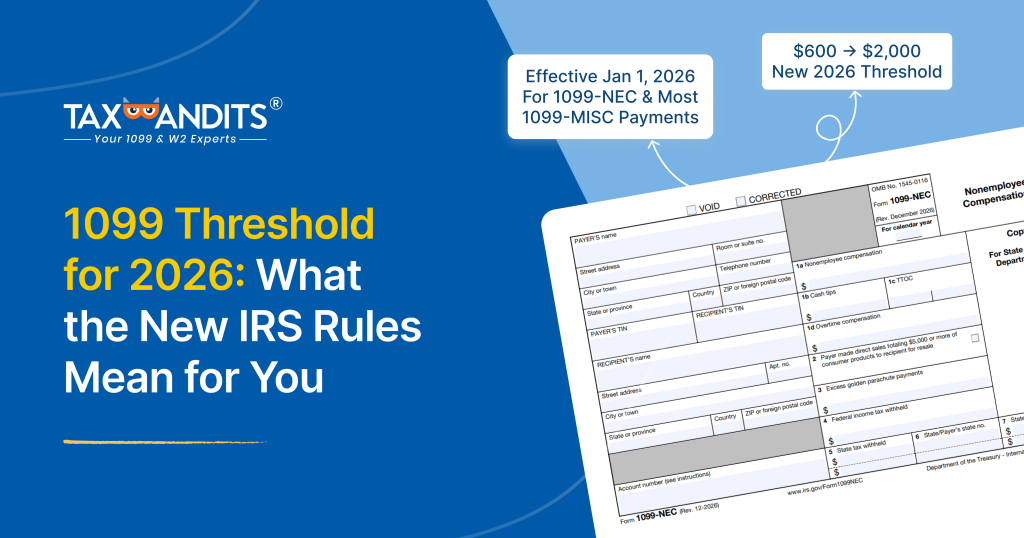
Starting in tax year 2026, the reporting threshold for Form 1099-NEC and most Form 1099-MISC payment categories rises from $600 to $2,000. The change comes from the One Big Beautiful Bill Act (OBBBA), and it’s the first update to this threshold since 1954. If you pay contractors, vendors, or freelancers, here’s exactly what’s changing, and what to do before the 2027 filing season.
What Changed for 1099s
Under the old rule, businesses had to file a 1099 once payments to a single recipient hit $600 in a calendar year. Beginning with payments made on or after January 1, 2026, that threshold jumps to $2,000 for:
- Form 1099-NEC: Nonemployee compensation
- Form 1099-MISC: Rents, other income, medical and health care payments, crop insurance proceeds, Section 409A deferrals, and nonqualified deferred compensation
Backup withholding kicks in when a payee’s taxpayer information is missing or incorrect. This now aligns with the same $2,000 trigger.
One important note: this only applies to 2026 payments, first reported during the 2027 filing season. If you’re filing for tax year 2025, the $600 threshold still applies.
What Stays the Same for 1099-NEC and 1099-MISC
Not every payment category on these forms moved. A few keep their existing thresholds:
- Royalties: Still $10
- Gross proceeds paid to an attorney: Still $600
- Fish purchased for resale: Still $600
- Direct sales of consumer products for resale: Still $5,000
It’s also worth restating that the higher threshold doesn’t touch a contractor’s tax liability. Whether or not your business issues a 1099, the recipient still owes tax on every dollar earned.
The threshold only changes who gets a form, not what’s taxable. W-9 collection and recordkeeping requirements remain the same.
Form 1099-K: A Related but Separate Change
This one gets a callout on its own.
The Form 1099-K threshold, which applies to payment card and third-party network transactions, reverts to $20,000 and 200-plus transactions. That change is retroactive to 2022. It’s a different form, a different threshold, and a different timeline from the 1099-NEC/MISC change above, so it’s best to keep these separate across recordkeeping.
Other 1099 Forms Aren’t Affected
The $2,000 change applies only to 1099-NEC and most of 1099-MISC; it doesn’t change the threshold for other 1099-series forms. If your business files other 1099s, reporting triggers stay the same:
- Form 1099-INT (interest income): Still $10
- Form 1099-DIV (dividends and distributions): Still $10
- Form 1099-R (retirement and annuity distributions): Still $10
- Form 1099-C (cancellation of debt): Still $600
- Form 1099-CAP (changes in corporate control or capital structure): Still $1,000
- Form 1099-LS (reportable life insurance sale): Still $1,000
- Form 1099-S (real estate transactions) and Form 1099-B (broker and barter exchange transactions): No minimum, unchanged
This matters because a business that files several 1099 forms can’t apply one blanket rule across the board. A vendor payment and an interest payment to the same recipient are tested against completely different thresholds, and only one of them moves.
What This Means for Your Business
A higher NEC/MISC threshold mostly means less paperwork for smaller vendor relationships.
If you paid a contractor $1,500 for the year, you won’t need to issue a 1099-NEC starting in 2026. For businesses that work with a large roster of low-dollar vendors, this can mean a significantly lighter January, fewer forms to prepare, fewer TINs to verify at the last minute, and fewer chances for the small errors that trigger IRS notices.
A few habits are worth building now, while 2026 payments are still being made:
- Collect W-9s from every vendor: Regardless of what you expect to pay, a $1,200 relationship in June can easily become $2,000 by December.
- Update your accounting or AP system’s aggregation logic per form type: The $2,000 trigger applies only to NEC and the affected MISC boxes, royalty, attorney, and fish-purchase categories, plus every other 1099 form your business files keeps its original thresholds. A system that blanket-applies $2,000 everywhere will under-report the categories that didn’t move.
- Don’t stop tracking payments under $2,000: Clean, complete books protect you whether or not you ever issue a form.
- Remember the e-file requirement is unchanged. Businesses filing 10 or more aggregate information returns across all form types still must e-file.
Final Thoughts
The 2026 threshold change simplifies reporting for many small vendor relationships, but it doesn’t lighten the underlying compliance work or affect the rest of the 1099 series. A contractor paid $1,500 for the year won’t need a 1099-NEC anymore, but still owes tax on every dollar of it, and unlike the old $600 figure, the new $2,000 threshold will be indexed for inflation going forward. Businesses that build per-form threshold awareness into their AP processes now will find the 2027 filing season considerably smoother.
TaxBandits automatically updates its filing thresholds each season, so you never apply an outdated number by mistake. Whether you’re filing a handful of 1099-NECs or managing returns across the full 1099 series, the platform helps you file accurately and stay ahead of IRS changes like this one.
Leave a Comment